
Omaha Analytics & Reporting: Know Exactly What's Working and What's Not
Clear Marketing Measurement That Shows Omaha Businesses What Is Actually Working
Marketing analytics is the measurement and analysis of your marketing performance to understand ROI and optimize strategy. Search Science provides comprehensive analytics services including Google Analytics 4 setup, custom dashboards, conversion tracking, and monthly reporting that shows exactly what's driving revenue.
TL;DR: Analytics & Reporting at Search Science
Our Analytics & Reporting Services
Comprehensive measurement and analysis across all marketing channels
Google Analytics 4 (GA4) Setup & Configuration
Complete GA4 property creation, event tracking, and migration
Google Analytics 4 is the latest version of Google Analytics, replacing Universal Analytics (which stopped collecting data in July 2023). GA4 uses an event-based tracking model that provides better cross-device tracking, more accurate user journey insights, and deeper integration with Google's advertising platforms. We handle complete GA4 setup from scratch or migrate your existing Universal Analytics data and configuration.
Our GA4 setup includes property creation with proper configuration, event tracking for all important user interactions (page views, clicks, form submissions, video plays), custom conversion setup aligned with your business goals, eCommerce tracking for revenue and product performance, cross-domain tracking if you have multiple websites, Google Tag Manager implementation for flexible tracking management, and migration planning from Universal Analytics including historical data import where possible. We ensure you're not just tracking, you're tracking the right things in ways that actually inform business decisions.
Conversion Tracking & Goal Setup
Track every revenue-generating action on your website
Conversions are the actions that matter to your business, form submissions, phone calls, purchases, chat interactions, downloads, video views, newsletter signups. Proper conversion tracking shows exactly what's working and what's not, allowing you to optimize marketing spend based on actual ROI rather than assumptions.
We set up comprehensive conversion tracking for form submissions (contact forms, quote requests, consultation bookings), phone calls (using dynamic call tracking that attributes calls to specific marketing sources), purchases and revenue (full eCommerce tracking with product-level attribution), live chat interactions (when visitors engage with your chat widget), micro-conversions (email signups, whitepaper downloads, video views), and event registrations. Each conversion is tracked with proper attribution showing which marketing channel, campaign, keyword, or piece of content drove it. This granular tracking reveals your true cost-per-lead and ROI for every marketing dollar spent.
Custom Dashboards (Looker Studio / Google Data Studio)
Real-time visual dashboards showing exactly what you need to know
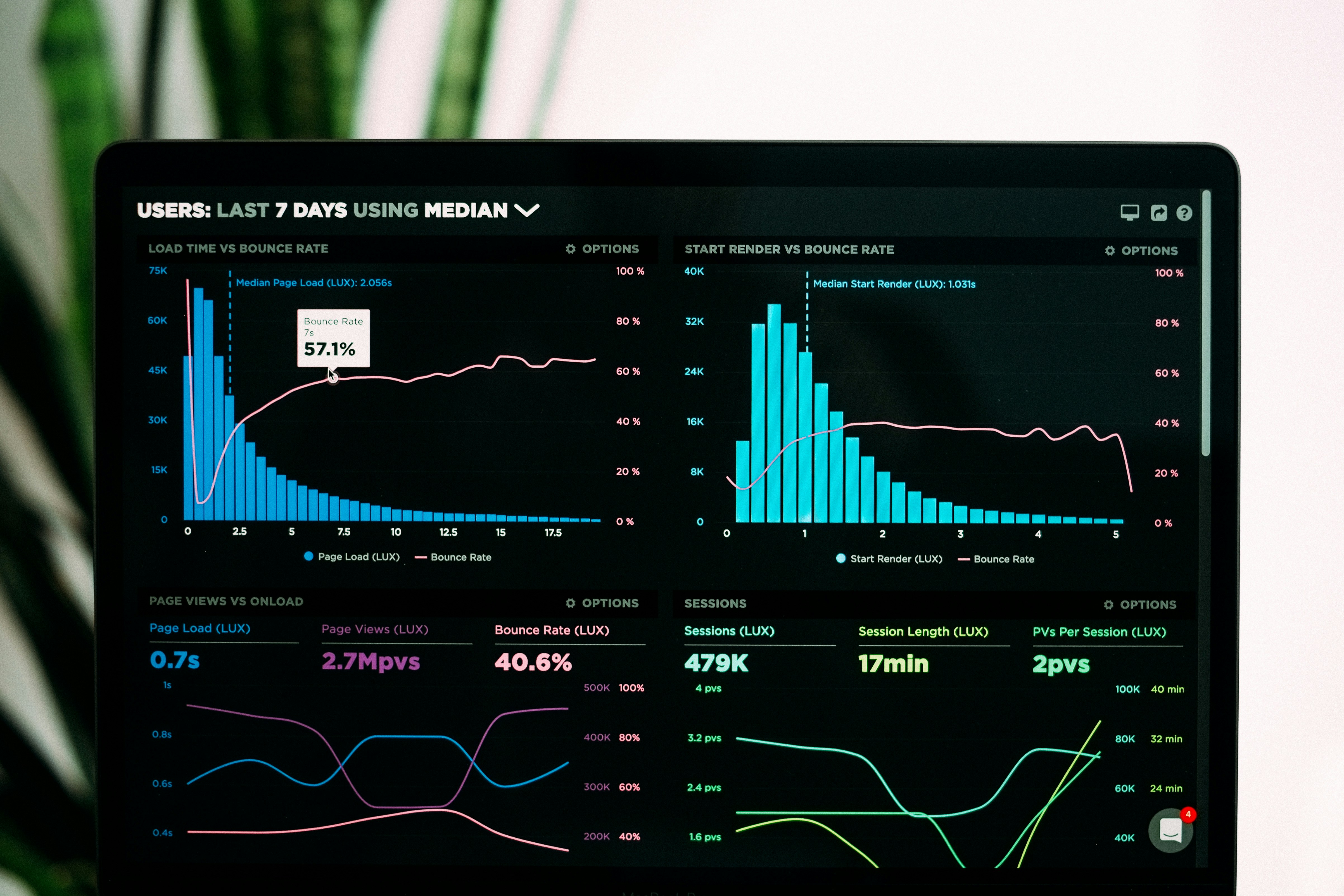
Standard analytics reports are overwhelming and hard to interpret. Custom dashboards present your most important metrics in visual, easy-to-understand formats that update in real-time. We build dashboards using Google Looker Studio (formerly Data Studio) that consolidate data from multiple sources into one comprehensive view.
Your custom dashboard shows traffic by source (organic, paid, social, referral, direct), keyword rankings and SEO performance, conversion rates and lead generation, revenue and ROI by channel, campaign performance across all platforms, customer lifetime value and retention metrics, and month-over-month comparisons. Dashboards are fully customizable to your business, a restaurant sees different metrics than a law firm or contractor. You can access dashboards anytime from any device, share them with your team, and see updates in real-time. No more waiting for monthly reports to know how marketing is performing.
Monthly Performance Reports
Plain-English reports explaining what happened and what to do next
Data without interpretation is useless. Our monthly reports translate analytics into clear, actionable insights written in plain English, not jargon-filled technical reports. You'll understand exactly what happened last month, why it happened, and what actions we're taking to improve performance.
Monthly reports include executive summary highlighting key wins and areas for improvement, traffic analysis showing sources, trends, and changes, conversion data with lead quality assessment, campaign performance breakdowns by channel, ROI calculations showing return on marketing investment, competitive insights where available, recommended actions prioritized by potential impact, and answers to your specific questions or concerns. Reports are delivered via PDF and accompanied by a video walkthrough explaining findings. We schedule review calls to discuss results and strategy adjustments. You'll never wonder what your marketing dollars are accomplishing.
Call Tracking & Attribution
Know which marketing drives phone calls and what happens on those calls
For many businesses, especially service providers and local businesses, phone calls are the primary conversion. Standard analytics can't track phone calls, leaving a massive blind spot in attribution. Call tracking assigns unique phone numbers to different marketing sources, revealing exactly which campaigns, keywords, or channels drive calls.
We implement call tracking using platforms like CallRail or CallTrackingMetrics that provide dynamic number insertion (website visitors see different numbers based on their traffic source), call recording for quality assurance and training, call transcription with keyword spotting, caller information and CRM integration, and detailed attribution showing which Google Ad, SEO keyword, or social media post generated each call. You'll see not just that someone called, but what they searched for, which page they visited, what they asked about, and whether they became a customer. This complete visibility eliminates guesswork and shows true marketing ROI including offline conversions.
Cross-Channel Attribution
Understand the complete customer journey across all touchpoints
Customers rarely convert on first interaction. They might find you through Google search, check your social media, read reviews, then return via Google Ads before calling. Standard last-click attribution gives all credit to the final touchpoint, ignoring the journey that led there. Multi-touch attribution reveals how channels work together to drive conversions.
We implement attribution models including first-click attribution (credit to initial discovery), last-click attribution (credit to final interaction before conversion), linear attribution (equal credit across all touchpoints), time-decay attribution (more credit to recent interactions), and data-driven attribution (algorithmic credit allocation based on actual impact). You'll see how SEO, PPC, social media, email, and direct traffic work together in the customer journey. This reveals which channels are true lead generators versus conversion assisters, informing smarter budget allocation. For example, you might discover SEO generates initial awareness but PPC closes deals, insights you'd miss with simplistic attribution.
What We Track and Why
We focus on metrics that directly tie to revenue and business outcomes, not vanity metrics that look impressive but don't drive decisions. Every metric we track answers a specific business question: "Which marketing channels generate the most leads?" "What's our actual cost per customer?" "Which campaigns deliver positive ROI?" Data without purpose creates confusion rather than clarity.
Core metrics we track include traffic by source (organic search, paid ads, social media, referral, direct) revealing which channels attract visitors, keyword rankings and SEO performance showing search visibility trends, conversion rates measuring how effectively traffic becomes leads or customers, cost per lead and customer acquisition cost (CAC) determining marketing efficiency, customer lifetime value (CLV) showing long-term revenue per customer, return on ad spend (ROAS) for paid campaigns, email performance including open rates, click rates, and revenue attribution, and month-over-month growth trends identifying what's improving or declining. These metrics directly inform budget allocation, strategy adjustments, and optimization priorities.
Beyond primary revenue metrics, we track diagnostic metrics that explain performance: bounce rate and time on site indicating content relevance and user engagement, page-level performance showing which content attracts and converts, device and geographic data revealing audience characteristics, landing page effectiveness measuring conversion optimization opportunities, and funnel drop-off points identifying where visitors abandon. These secondary metrics help diagnose issues when primary metrics decline and identify specific optimization opportunities. The combination of outcome metrics and diagnostic metrics provides complete visibility into marketing performance and actionable insights for continuous improvement. Our SEO services, PPC management, and social media marketing all benefit from this comprehensive measurement approach.
Platforms & Tools We Use
Google Analytics 4
Primary analytics platform for website traffic, user behavior, and conversion tracking
Google Search Console
SEO performance data including rankings, impressions, clicks, and technical issues
Google Tag Manager
Flexible tag management for implementing tracking without code changes
Looker Studio (Data Studio)
Custom dashboard and reporting platform consolidating data from multiple sources
Google Ads Reporting
PPC campaign performance, keywords, ad copy testing, and conversion data
CallRail / CallTrackingMetrics
Phone call tracking, recording, attribution, and lead qualification
SEMrush / Ahrefs
SEO analytics including rankings, backlinks, competitors, and keyword opportunities
Meta Business Suite
Facebook and Instagram analytics including reach, engagement, and ad performance
HubSpot / ActiveCampaign
Marketing automation analytics including email performance, lead scoring, and revenue attribution
We use industry-standard analytics platforms that integrate seamlessly and provide comprehensive visibility. Google Analytics 4 serves as the foundation for website analytics, tracking user behavior, conversions, and revenue attribution. Google Search Console provides critical SEO data including keyword rankings, impressions, clicks, and technical issues. Google Tag Manager enables flexible tracking implementation without requiring code changes for every update. These free Google tools form the core analytics stack for most businesses.
For visualization and reporting, Looker Studio (formerly Google Data Studio) creates custom dashboards consolidating data from multiple sources into unified views. For paid advertising, native platform reporting from Google Ads, Facebook Ads, and LinkedIn Ads provides campaign-specific insights. Call tracking platforms like CallRail or CallTrackingMetrics attribute phone calls to marketing sources. SEO tools including SEMrush and Ahrefs provide competitive intelligence, keyword research, backlink analysis, and ranking tracking. Marketing automation platforms like HubSpot or ActiveCampaign offer email performance analytics and lead attribution.
The specific tools we implement depend on your marketing channels, budget, and reporting needs. Small businesses typically need GA4, Search Console, and basic dashboards. Larger businesses benefit from comprehensive tool stacks including call tracking, marketing automation analytics, and advanced attribution modeling. We recommend tools strategically, avoiding unnecessary complexity while ensuring complete visibility into all marketing investments. Integration is key, data flowing between platforms creates holistic insights that isolated tools can't provide. Our expertise spans all major analytics platforms, allowing us to design optimal measurement systems for any business size or industry.
Why Analytics Matters for Every Service
Analytics transforms every marketing service from guesswork into data-driven optimization. For SEO, analytics shows which keywords drive traffic, which content converts visitors, how organic search contributes to revenue, and where technical or content improvements deliver ROI. Without analytics, SEO operates blindly, you're optimizing without knowing what works. With analytics, every SEO decision is informed by actual performance data showing what drives leads and revenue.
For PPC and paid advertising, analytics reveals which campaigns, ad groups, keywords, and ad copy drive profitable conversions versus wasting budget. We track return on ad spend (ROAS), cost per conversion, quality score, and attribution to optimize every dollar spent. For social media marketing, analytics shows which content engages audiences, which platforms drive website traffic and leads, and how social media contributes to customer acquisition. For email marketing, analytics tracks open rates, click-through rates, conversion rates, and revenue per email, identifying what messaging resonates and drives action.
Marketing automation relies entirely on analytics to function, tracking user behavior triggers automated sequences, lead scoring uses engagement data, and performance optimization depends on conversion metrics. Without robust analytics, automation operates on assumptions rather than data. The combination of comprehensive analytics and strategic marketing services creates compounding improvements, data reveals what works, we double down on successful tactics, results improve, data reveals new opportunities, and the cycle continues. This data-driven approach is why our clients consistently see positive ROI and continuous performance improvement rather than stagnant results from unfocused marketing efforts.
Frequently Asked Questions About Analytics & Reporting
Everything you need to know about marketing analytics
What is GA4 and do I need it?
How much does analytics setup cost?
What reports will I receive and how often?
Can you set up tracking on my existing website?
What's the difference between GA4 and Universal Analytics?
How do you track phone calls from my website?
Can you build a custom dashboard for my business?
What metrics should I be tracking?
Do you provide training on how to read the reports?
How do you attribute leads across multiple channels?
Ready to Measure Your Marketing?
Let's Build a Data-Driven Marketing System
Stop guessing what's working. Start making data-driven decisions that improve ROI and drive revenue growth. Whether you need GA4 setup, custom dashboards, or comprehensive monthly reporting, we provide the analytics infrastructure and insights you need to optimize every marketing dollar.
Related Resources
Explore related services, guides, and case studies relevant to this page.