Digital marketing analytics and display ads

Omaha Display Advertising

Put eye-catching visual ads in front of the right Omaha audiences across millions of sites and apps

What is Display Advertising?

Display advertising puts visual ads, including banners, rich media, and video, in front of people as they browse websites, read the news, or use apps across the internet.

Whether the goal is building broad top-of-funnel awareness or winning back shoppers who walked away from a full cart, our display campaigns get the right message to the right person at the right moment.

Direct Answer

Display advertising is the practice of placing visual ads (banner, native, video, and rich media) on websites, apps, and connected TV platforms through ad networks and programmatic platforms. Display works for upper-funnel awareness, mid-funnel consideration, and bottom-funnel retargeting. Costs range from $1 to $15 CPM (cost per thousand impressions) on the Google Display Network and $5 to $25 CPM on premium programmatic inventory through DSPs like The Trade Desk, DV360, and StackAdapt. Display advertising is most effective when paired with strong audience targeting, frequency capping, careful placement exclusions, and conversion tracking that captures both click-through and view-through conversions.

Key Takeaways

  • Networks used: Google Display Network, Microsoft Audience Network, programmatic DSPs (DV360, The Trade Desk, StackAdapt, Criteo, MediaMath)
  • Cost structure: $1 to $15 CPM on GDN, $5 to $25 CPM on premium programmatic, with management fees from 15% to 25% of media spend
  • Best use cases: retargeting site visitors, building awareness in target geographies, supporting search campaigns mid-funnel, dynamic product remarketing for ecommerce
  • Standard formats: responsive display ads, banner sizes (300x250, 728x90, 160x600, 320x50), HTML5 rich media, native, video pre-roll, connected TV
  • Required setup: conversion tracking with view-through windows, frequency capping, placement exclusions, and audience segmentation across funnel stages

Key Benefits

Why visual ads belong in your marketing mix

Massive brand awareness across the web

Retargeting previous website visitors

Placement on high-authority, relevant websites

Lower cost-per-click than search ads

Our Capabilities

Comprehensive display and programmatic services

Banner & HTML5 Design

Programmatic Buying

Advanced Retargeting

Rich Media Ads

Available At Our Locations

Partner with our local experts in your area to drive measurable digital growth.

Omaha, NE

14810 State St, Bennington, NE 68007

View Office

Serving the Omaha Metro

Local SEO and digital marketing for Omaha-area businesses

View Office

Nebraska and Nationwide

Remote-friendly campaigns for clients across the country

View Office

Our Display Process

How we turn impressions into customers

1

Audience Strategy

Defining contextual, demographic, and behavioral targeting parameters.

2

Creative Design

Designing eye-catching banners, HTML5 ads, and responsive creatives.

3

Campaign Setup

Deploying campaigns on Google Display Network and programmatic DSPs.

4

Optimization

Adjusting placements, bids, and creatives to maximize performance.

Proven Results

Real impact from our display campaigns

12M+

Ad impressions delivered monthly

65%

Decrease in CPA via retargeting

2.1x

Lift in branded search volume

What Display Advertising Actually Costs

In short: Display advertising costs $1 to $25 per thousand impressions (CPM) depending on network, audience, and inventory quality. Google Display Network runs the lowest CPM at $1 to $15. Premium programmatic inventory through DSPs runs $5 to $25 CPM. Add 15% to 25% management fees on top. A meaningful display campaign starts at $1,500 to $3,000 per month in media spend; high-volume retargeting and awareness campaigns run $10,000 to $50,000 per month.

Google Display Network (GDN): the largest display inventory in the world, reaching approximately 90% of internet users globally through 2 million+ websites and apps. CPM typically runs $1 to $5 for broad targeting and $5 to $15 for tight audience targeting (remarketing lists, in-market audiences, custom intent). GDN is the right starting point for most small and mid-market display campaigns because of inventory scale and direct integration with Google Ads search campaigns.

Microsoft Audience Network: the Microsoft equivalent reaching MSN, Outlook, Microsoft Edge, and partner sites. CPM runs $2 to $8. Lower inventory volume than GDN but higher quality audience for B2B and older demographics. Worth running alongside GDN for B2B clients and any client targeting professional or 45+ audiences.

Programmatic DSPs (Demand-Side Platforms): The Trade Desk, Google DV360, StackAdapt, Criteo, MediaMath. CPM ranges from $5 to $25+ depending on inventory tier and targeting precision. DSPs provide access to premium publisher inventory, connected TV (CTV), audio (Spotify, Pandora), and digital out-of-home that GDN does not cover. Programmatic is appropriate for established advertisers with $10,000+/month media budgets who need inventory and audience capabilities beyond what GDN offers.

Retargeting pricing: retargeting CPMs run higher than prospecting CPMs because the audience is smaller and competition for impressions is more intense. Expect $5 to $15 CPM on GDN retargeting, $10 to $30 on programmatic retargeting through Criteo or AdRoll. Retargeting almost always produces the strongest direct-response ROI within a display program because the audience has already shown intent.

Connected TV (CTV) and Over-the-Top (OTT): Hulu, Disney+, Roku, Samsung TV Plus, Pluto TV. CTV CPM runs $25 to $60. CTV is the premium tier of display advertising, appropriate for awareness-stage campaigns with $15,000+ monthly budgets. CTV works exceptionally well for local service businesses targeting specific DMAs because the impression quality is far higher than display banner equivalents.

Where display budgets get wasted: broad targeting without exclusions (which produces high impressions but no conversions), no frequency capping (which serves the same ad to the same person 50+ times in a week), Made-for-Advertising (MFA) inventory exposure (sites built solely to generate ad impressions, with no real audience), and no separation between prospecting and retargeting reporting (which obscures campaign performance). Our display campaign builds always include MFA exclusion lists, frequency caps, and funnel-stage segmentation from launch.

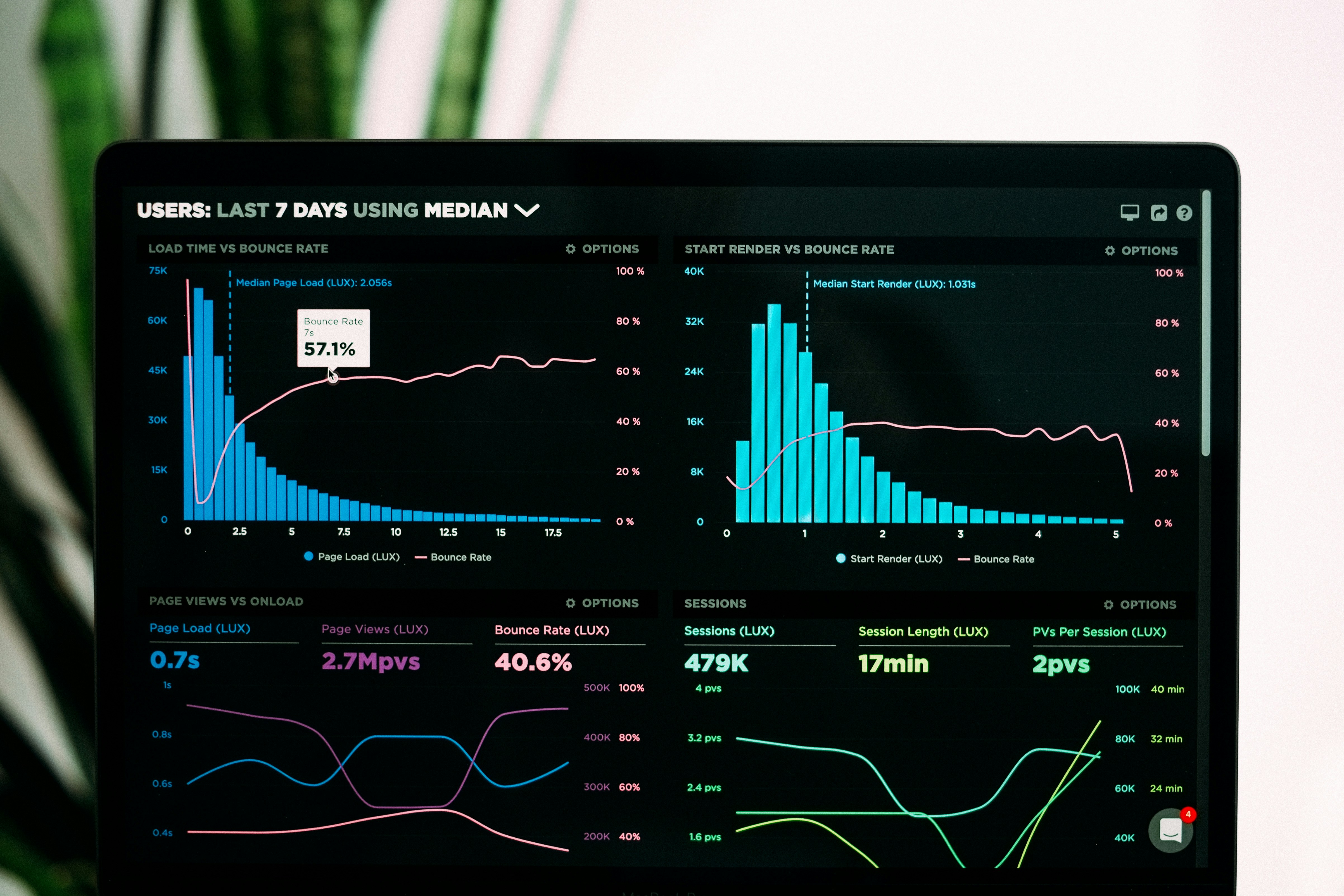
Display Networks and DSPs Explained

In short: Display inventory is purchased through two primary channels: direct ad networks like the Google Display Network (GDN) and Microsoft Audience Network, and programmatic Demand-Side Platforms (DSPs) like The Trade Desk, DV360, and StackAdapt. Networks are simpler to operate and integrate directly with their parent search platforms. DSPs provide broader inventory access, more sophisticated targeting, and access to premium inventory tiers like Connected TV that ad networks do not cover.

Ad networks (GDN, Microsoft Audience Network): run inside the platform's own ad management interface (Google Ads, Microsoft Advertising). Inventory comes from the network's own publisher relationships. Audience data comes from the parent platform (search history, YouTube viewing, Gmail signals for GDN; LinkedIn data and Microsoft search history for Microsoft Audience Network). Setup is fast, integration with search campaigns is tight, and there is no separate platform learning curve.

Programmatic DSPs: separate platforms that aggregate inventory from multiple ad exchanges (Google Ad Exchange, Magnite, OpenX, PubMatic, AppNexus/Xandr) and apply your audience data to bid on impressions in real time. The Trade Desk is the largest independent DSP and the default choice for sophisticated programmatic. DV360 (Google's enterprise DSP) is the integrated option for clients already on Google's ad stack. StackAdapt is the mid-market option with strong native and CTV inventory. Criteo specializes in retargeting and dynamic product ads for ecommerce. MediaMath, Adelphic, and Beeswax serve specific verticals.

Programmatic Guaranteed (PG) and Private Marketplaces (PMP): two premium programmatic models that sit above the open exchange. PG is direct deals with specific publishers at locked CPMs (used for premium awareness placements). PMP is invite-only auctions where a select group of advertisers bids on a specific publisher's premium inventory. Both produce higher-quality placements than open exchange but require dedicated planning and typically minimum $25,000+ commitments to specific publishers.

Native advertising platforms (Taboola, Outbrain): serve content-style ads at the bottom of publisher articles. Native typically runs $0.50 to $3 CPC and works for top-of-funnel content distribution and lead generation. Native is its own discipline within display advertising and requires content creative (headlines, thumbnails, landing pages) optimized for the format.

Choosing the right channel: GDN for small budget ($1,500 to $10,000/month) and search-integrated campaigns; Microsoft Audience Network as a complement to GDN for B2B; programmatic DSPs for $10,000+/month budgets needing premium inventory or CTV; native for content distribution and TOFU lead generation. Most clients run a combination, with GDN as the foundation and additional channels layered in as budget supports them.

Retargeting Strategies That Actually Convert

In short: Retargeting is the single highest-ROI display application for most businesses because the audience has already demonstrated intent. Effective retargeting segments visitors by behavior (cart abandoners vs page viewers vs blog readers), customizes creative to the funnel stage, applies frequency caps to prevent over-exposure, and excludes converted users to avoid wasting impressions on existing customers.

Behavioral segmentation: the foundation of effective retargeting. Cart abandoners and form abandoners are the highest-intent audience and warrant the most aggressive creative and bid strategy. Pricing page visitors and contact page visitors are the next tier. Service page or product page visitors are mid-tier. Blog readers and homepage-only visitors are lowest tier. Each segment gets distinct creative, distinct landing pages, and distinct bid strategies. Pooling them together wastes the high-intent audience on generic messaging.

Dynamic product remarketing: for ecommerce clients, dynamic ads pull product data from a product feed and serve ads featuring the exact products the visitor viewed. Google Ads Dynamic Remarketing, Facebook Dynamic Product Ads, and Criteo are the three primary platforms. Setup requires a product feed in Google Merchant Center or equivalent, a tag pushing product view events to the ad platform, and creative templates that render product images, prices, and titles dynamically. Done correctly, dynamic product remarketing typically produces 3 to 5x the ROI of static retargeting.

CRM audience targeting: upload customer lists to ad platforms to retarget known customers and prospects. Use cases: cross-sell campaigns to existing customers, win-back campaigns to lapsed customers, nurture campaigns to long-cycle B2B leads, and lookalike audience seeding for prospecting. Customer Match in Google Ads, Custom Audiences in Meta Ads, and CRM Targeting in The Trade Desk all support this. Match rates typically run 40% to 70% depending on the freshness and completeness of the email or phone data uploaded.

Frequency capping: set per-user impression limits to prevent ad fatigue and waste. Standard frequency caps for retargeting: 3 to 5 impressions per user per day, 15 to 25 impressions per user per week. Higher frequency works for cart abandoners and high-intent segments; lower frequency for top-of-funnel segments. Without frequency caps, retargeting campaigns serve the same ad to the same user 50+ times per week, which damages brand perception and produces diminishing returns after the first 5 to 10 impressions.

Conversion exclusion: exclude users who have already converted from retargeting audiences. Without conversion exclusion, you serve retargeting ads to people who already became customers, wasting impressions and budget on the wrong audience. Set this up at campaign launch, not as an afterthought, because the impressions wasted in the first month of a poorly-configured retargeting campaign rarely come back.

Display Creative That Performs

In short: Display ad creative requires the standard IAB sizes (300x250 medium rectangle, 728x90 leaderboard, 160x600 wide skyscraper, 320x50 mobile leaderboard, 300x600 half page), responsive display ad assets for Google's automated formats, plus HTML5 rich media or video for premium placements. Strong display creative is brand-consistent, fast-loading, immediately recognizable, and tested against alternative creative regularly.

Standard IAB banner sizes: the IAB (Interactive Advertising Bureau) defines standard banner sizes that work across the largest portion of available inventory. The five sizes that produce 80% of available impressions: 300x250 (medium rectangle), 728x90 (leaderboard), 160x600 (wide skyscraper), 320x50 (mobile leaderboard), and 300x600 (half page). Producing creative in all five sizes for every campaign is the baseline. Producing only one or two sizes excludes a meaningful portion of available inventory.

Responsive Display Ads (RDA): Google's automated format that assembles ads from uploaded image and text components. Provide 15 images at the recommended dimensions (1.91:1 and 1:1 aspect ratios), 5 headlines, 5 long headlines, 5 descriptions, and your logo. Google's machine learning combines these into ads optimized per placement. RDAs scale across far more inventory than static banners and typically outperform static creative in CTR and conversion rate. RDAs should be the primary format for most GDN campaigns.

HTML5 rich media: animated, interactive display ads that go beyond static images. Built in tools like Google Web Designer or Adobe Animate, served through tags that account for animation, interactivity, and tracking. Rich media typically produces 50% to 100% higher engagement than static banners but requires production budget (typically $500 to $3,000 per ad unit) and proper tag implementation. Rich media is appropriate for awareness campaigns with sufficient media budget to justify the production cost.

Native ad creative: headlines, descriptions, and thumbnail images formatted to match the host publisher's content style. Native creative testing is its own discipline; small headline changes can produce 2 to 5x CTR differences. Native creative typically requires 5 to 10 thumbnail variants and 10 to 20 headline variants for proper testing during initial campaign optimization.

Video display creative: 6-second bumper ads, 15-second non-skippable ads, 30-second skippable ads, and full pre-roll for CTV. Video display works on YouTube (TrueView through GDN), in-stream on programmatic, and on Connected TV. Production cost varies widely from $500 for stock-footage-and-VO assembly to $50,000+ for original premium production. The right production tier depends on the channel: YouTube and programmatic in-stream tolerates lower production quality than CTV, where 1080p minimum and high production value are expected.

Display Attribution and Measurement

In short: Display advertising attribution requires both click-through (click on the ad, then converts) and view-through (sees the ad without clicking, then converts later) measurement. Click-through conversions undercount display value by 60% to 80% because most display impact happens through view-through, not direct clicks. Proper measurement uses view-through windows of 7 to 30 days and reports both attribution paths separately.

Click-through conversion tracking: the standard conversion path where a user clicks the ad and converts within the click attribution window (typically 30 days for Google Ads, 1 to 28 days for Meta Ads depending on settings). This captures the direct-response portion of display performance, which is typically a small fraction of total display impact for awareness and upper-funnel campaigns.

View-through conversion (VTC) tracking: conversions from users who saw the display ad without clicking and converted through a different channel within the view-through window. View-through windows typically run 1 day for retargeting (tight window because retargeting impact is immediate), 7 days for mid-funnel display, and 30 days for awareness campaigns where impact takes longer to materialize. View-through conversions typically account for 60% to 80% of total display impact for awareness campaigns and 20% to 40% for retargeting.

Multi-touch attribution: the more sophisticated model that allocates conversion credit across all touchpoints in the customer journey rather than crediting only the last click. First-click, linear, time-decay, position-based, and data-driven attribution all represent different ways of allocating credit. Google Analytics 4 (GA4) provides data-driven attribution as the default, which uses machine learning to allocate credit based on each touchpoint's contribution to conversion likelihood. This produces a more accurate picture of display's contribution than last-click.

Brand lift studies: for awareness-stage display campaigns where conversion attribution does not capture the value, brand lift studies measure changes in ad recall, brand awareness, ad recognition, brand favorability, and purchase intent through survey methodology. Google Ads, Meta Ads, and DSPs like The Trade Desk all offer brand lift study tools. Brand lift studies cost $5,000 to $25,000 to run and require sufficient campaign reach (typically $50,000+ in media spend) to produce statistically significant results.

Incrementality testing: the gold standard for understanding true ad impact. Incrementality tests use geographic holdouts (run the campaign in some markets but not others) or audience holdouts (exclude a random sample of the target audience from receiving ads) to measure the lift in conversions caused by the campaign rather than the conversions that would have happened anyway. Incrementality is harder to set up than view-through tracking but produces the most defensible measurement of campaign ROI. Recommended for any client spending $25,000+ per month on display and serious about understanding what is actually working.

Display Advertising for Local Service Businesses

In short: Local service businesses (HVAC, plumbing, legal, healthcare, home services) use display advertising for hyperlocal awareness through geo-fencing, retargeting site visitors to drive call conversions, and Connected TV for premium awareness in defined DMAs. Local display works best as a complement to search and Google Business Profile rather than a standalone channel, with budgets typically $1,500 to $5,000 per month for single-location businesses.

Geo-fencing and geo-targeting: Geo-fencing draws a virtual boundary around a physical location (a competitor's storefront, an event venue, a specific neighborhood) and serves ads to mobile devices entering that boundary. Geo-targeting serves ads to users based on their general location (city, ZIP code, DMA). Geo-fencing has higher precision but lower volume; geo-targeting has broader reach. For most local service businesses, geo-targeting at the city or ZIP code level produces better results than geo-fencing because the impression volume is sufficient to drive measurable conversion.

Local retargeting: the highest-ROI display application for local service businesses. Users who visited the website but did not convert see display ads across the GDN reminding them of the service. Phone-call conversion tracking captures the calls that result from retargeting impressions. Local retargeting works particularly well for emergency-intent services (HVAC, plumbing, locksmith) where the conversion decision happens fast once a need arises.

Connected TV for local businesses: Hulu, Roku, and similar CTV platforms now support DMA-level and even ZIP-level targeting. CTV for local service businesses produces premium awareness at scale, particularly in markets where competitors are not yet on CTV. CPM runs $25 to $60 but the impression quality and undivided attention exceed display banner equivalents by an order of magnitude. CTV is appropriate for established local service businesses with $5,000+/month media budgets.

Local search and display integration: display works best when integrated with search and local SEO. Users who see display ads are 50% to 100% more likely to click on the same brand's search ads when they later search. The combined search-plus-display campaign produces better total ROI than either channel alone. Our local service business campaigns always integrate display retargeting with search and Map Pack visibility work.

What does not work for local display: broad national targeting, top-of-funnel content distribution (better handled through content marketing), banner-only campaigns without retargeting, and Hulu CTV without sufficient frequency to make an impression. The mistakes are usually around budget allocation rather than channel choice; a $500/month banner-only campaign in a competitive market will not produce meaningful results regardless of how well it is configured.

Common Display Advertising Mistakes That Waste Budget

In short: The display advertising mistakes that consistently waste budget are broad targeting without exclusions, no frequency capping, exposure to Made-for-Advertising (MFA) inventory, mixed prospecting and retargeting reporting, no view-through attribution, and over-reliance on automated bidding without bid strategy testing. Each individually can cut display ROI by 30% to 60%; in combination they routinely waste 70%+ of display budget.

Made-for-Advertising (MFA) inventory exposure: MFA sites are designed solely to generate ad impressions, typically with auto-refreshing pages, dense ad placements, and no real audience. The Association of National Advertisers (ANA) 2023 study found that MFA inventory accounts for 21% of programmatic display spend on average. Display campaigns without active MFA exclusion lists routinely waste 15% to 30% of media spend on MFA placements that produce no conversions. The fix is MFA exclusion lists at the campaign level, applied at launch and updated quarterly.

No frequency capping: serving the same ad to the same user dozens of times per week damages brand perception and produces diminishing returns after the first 5 to 10 impressions. The fix is frequency caps set at launch: 3 to 5 impressions per user per day, 15 to 25 impressions per user per week for retargeting; lower caps for prospecting. Frequency capping is the single highest-leverage optimization available because it costs nothing to implement and immediately reduces wasted impressions.

Mixed prospecting and retargeting reporting: reporting prospecting and retargeting performance as a single combined number obscures campaign performance. Prospecting typically produces lower CTR and conversion rate than retargeting; combining them in reports makes prospecting look better than it is and makes retargeting look worse than it is. The fix is separate campaigns, separate budgets, separate reports, separate optimization decisions.

Click-through-only conversion measurement: measuring display only on click-through conversions misses 60% to 80% of display impact. The fix is view-through conversion tracking with appropriate attribution windows (1 day for retargeting, 7 days mid-funnel, 30 days awareness) and reporting that separates click-through and view-through paths.

Over-reliance on automated bidding without testing: Google's Target CPA and Target ROAS bidding work well for established campaigns with conversion volume, but they require sufficient conversion data (typically 30+ conversions per month per campaign) to optimize effectively. New campaigns or low-conversion campaigns running automated bidding from launch waste budget on undirected exploration. The fix is starting with manual or enhanced CPC bidding, accumulating conversion data, then transitioning to automated bidding once conversion volume supports it.

Creative without testing: running a single ad creative for the duration of a campaign means missing the 2 to 5x performance differences between creative variants. The fix is launching campaigns with 3 to 5 creative variants per ad group, evaluating performance at the 1,000-impression mark, killing the bottom performers, and continuously rotating in new creative every 4 to 6 weeks to combat creative fatigue.

Frequently Asked Questions About Display Advertising

How much does display advertising cost per month?

Display advertising runs $1 to $25 per thousand impressions (CPM) depending on the network and how tightly you target. The Google Display Network runs $1 to $15 CPM, premium programmatic through DSPs like The Trade Desk runs $5 to $25 CPM, and Connected TV runs $25 to $60 CPM. On top of media you pay management fees of 15% to 25% of spend. A meaningful campaign starts at $1,500 to $3,000 a month in media, while high-volume retargeting and awareness pushes run $10,000 to $50,000 a month.

What is the difference between Google Display Network and programmatic advertising?

The Google Display Network (GDN) is a single ad network that reaches roughly 90% of internet users through Google's publisher partnerships, all managed inside Google Ads. Programmatic advertising uses Demand-Side Platforms like The Trade Desk, DV360, and StackAdapt to pull inventory from many ad exchanges at once and apply your audience data through real-time bidding. GDN is simpler and a great fit for smaller budgets of $1,500 to $10,000 a month. Programmatic opens up far broader inventory, including Connected TV, premium publishers, and audio, but it really needs $10,000 or more a month and dedicated platform expertise to run well.

Is retargeting more effective than prospecting?

Retargeting almost always delivers higher direct-response ROI than prospecting, simply because the audience has already shown intent. Retargeting click-through and conversion rates typically run 3x to 10x what prospecting produces. But retargeting only works if you have an audience to retarget, and that is exactly what prospecting builds. The smart play is to run both: prospecting fills the top of the funnel that retargeting later converts. Lean only on retargeting and you eventually burn through your audience; lean only on prospecting and you never cash in on the interest you create.

How do you prevent ad fraud and Made-for-Advertising sites?

We use MFA exclusion lists maintained quarterly, fraud detection partnerships (DoubleVerify, IAS, MOAT) on larger programmatic campaigns, and placement reports reviewed monthly to catch low-quality inventory. The Association of National Advertisers found that MFA inventory accounts for 21% of programmatic display spend on average; campaigns without active exclusions waste 15% to 30% of budget on MFA. Our standard exclusion list at campaign launch covers MFA, content categories not suitable for the brand, and historically poor-performing domains.

What is view-through conversion tracking and why does it matter?

View-through conversion tracking measures conversions from users who saw the display ad without clicking and converted later through a different channel. Click-through conversion tracking only captures direct clicks, missing 60% to 80% of display advertising impact for awareness and upper-funnel campaigns. View-through windows typically run 1 day for retargeting, 7 days mid-funnel, and 30 days for awareness. Without view-through tracking, display advertising looks far less effective than it actually is, which leads to underinvestment in a channel that drives meaningful incremental conversion.

Should small businesses use Connected TV advertising?

Connected TV (CTV) advertising on platforms like Hulu, Roku, and Samsung TV Plus now supports DMA-level targeting at $25 to $60 CPM. CTV is appropriate for established small businesses with $5,000+/month media budgets in competitive local markets where competitors are not yet on CTV. The impression quality and undivided attention exceed display banner equivalents significantly. For small businesses with limited budget, the standard recommendation is to run search and Google Display Network retargeting first, then layer CTV as budget allows.

What ad sizes should I produce for a display campaign?

Produce the five standard IAB sizes that account for about 80% of available inventory: 300x250 medium rectangle, 728x90 leaderboard, 160x600 wide skyscraper, 320x50 mobile leaderboard, and 300x600 half page. For Google Display Network campaigns, also produce Responsive Display Ad assets (15 images at 1.91:1 and 1:1 aspect ratios, 5 headlines, 5 long headlines, 5 descriptions, logo). Responsive Display Ads scale across more inventory than static banners and typically outperform them in both CTR and conversion rate.

How do you measure display advertising success?

We track impressions, click-through rate (CTR), click-through conversions, view-through conversions (with appropriate attribution windows), cost per acquisition (CPA), return on ad spend (ROAS), incrementality through holdout testing on larger campaigns, and brand lift studies for awareness campaigns. Reports separate prospecting and retargeting performance and track each funnel stage independently. We also monitor placement reports monthly to identify MFA exposure and creative performance by variant to inform optimization decisions.

Our Integrated Digital Marketing Approach

True digital success doesn't happen in silos. We deploy an integrated marketing methodology where every channel works in perfect synergy to amplify your results. By combining organic reach, targeted paid media, engaging content, and data-driven optimization, we create a unified growth engine for your business.

Explore our comprehensive suite of services below, meticulously categorized to address every stage of your customer's journey, from initial brand discovery to final conversion and long-term loyalty.

SEO & Search

SEO Services

Dominate search rankings and drive consistent organic traffic.

  • Increase organic visibility
  • Target high-intent keywords
Learn More

Local SEO

Capture local market share and dominate "near me" searches.

  • Boost local map pack rankings
  • Drive targeted foot traffic
Learn More

Keyword Research

Identify the most profitable search terms for your industry.

  • Uncover low-competition keywords
  • Align with user intent
Learn More

Google My Business

Optimize your GMB profile for maximum local discovery.

  • Enhance local trust
  • Increase direct calls and visits
Learn More

Content & Creative

Content Marketing

Create valuable content that attracts and converts your audience.

  • Establish thought leadership
  • Fuel organic growth
Learn More

Blogging

Consistent, high-quality blog content creation tailored to your niche.

  • Engage your audience
  • Improve site indexing frequency
Learn More

Video Marketing

Engaging video content to capture attention across multiple platforms.

  • Increase dwell time
  • Boost cross-platform engagement
Learn More

Paid Advertising

PPC Advertising

Drive immediate results with targeted pay-per-click ad campaigns.

  • Instant traffic generation
  • Precise budget control
Learn More

Paid Media

Comprehensive paid strategy across search and social platforms.

  • Maximize overall ROI
  • Multi-channel targeting
Learn More

Display Advertising

Visual ad campaigns across the expansive display network.

  • Massive brand awareness
  • Effective site retargeting
Learn More

Email & Automation

Email Marketing

Build relationships and drive repeat sales with personalized campaigns.

  • High channel ROI
  • Direct audience access
Learn More

Marketing Automation

Streamline your marketing funnels with intelligent automated workflows.

  • Save manual hours
  • Nurture leads 24/7
Learn More

Brand & Analytics

Branding

Develop a cohesive, powerful brand identity and market positioning.

  • Stand out from competitors
  • Communicate core values
Learn More

Analytics & Reporting

Comprehensive tracking and actionable insights for your campaigns.

  • Closed-loop reporting
  • Data-driven decisions
Learn More

Reputation Defense

Proactively protect and manage your brand's public digital image.

  • Crisis mitigation
  • Build consumer trust
Learn More

Press Releases

Strategic PR distribution to maximize brand visibility and authority.

  • Earn media coverage
  • Boost authoritative backlinks
Learn More

Media Outreach

Connect proactively with journalists and industry influencers.

  • Expand digital footprint
  • Secure high-tier placements
Learn More

Ready to Expand Your Reach?

Start capturing high-intent audiences with beautiful, targeted display ads.

Get Started Today